

Rose Rescue
Saving End-of-Season Sale-Rack Roses

A few stems of Eden, Pretty in Pink Eden & White Eden.
Photo by Karissa Monette
Summer is just around the corner here in the Northern Hemisphere. That means big box stores and many garden centers generally have a selection of leftover, nearly forgotten-about roses. They are often considerably marked down and rather pathetic looking in their plastic-bag tube packaging. The roots are tightly cramped and stuffed in a mixture of sawdust, peat or wood chips. They’re unable to be watered or nurtured during of their time on the shelf. A lot of folks in the rose world affectionally call these plants “body bags”, and I can see why.
Luckily for us, roses are naturally quite hardy. We have found that with a bit of knowledge and simple TLC, we can effectively rescue the rough looking roses from the end-of-season sale-rack doom.
Make sure the variety is appropriate for your growing zone
For outdoor plantings: make sure the rose is hardy to your zone or below. You do not want to try to grow USDA Zone 7 Koko Loko roses in a Zone 5 climate.
For high tunnel plantings: You can “gain” one Zone. For example- If you are Zone 5, you can successfully grow Zone 6 roses in your high tunnels.
Scratch the canes prior to purchasing. Find a rose with green flesh under the bark.
Some leafy bits, mold, or black canes are okay. As long as you have one (or hopefully more) good canes with a few inches of green flesh- you should be good to go. The good cane(s) should be thicker than a pencil.
If you can find roses with nice green growth coming out of multiple canes and nodes, that is ideal!
Remove rose from store packaging as soon as possible.
Rinse off the entire plant.
Remove all of the detritus surrounding the roots and make sure the crown of the plant is clean and free of debris.
If you knock off some buds by accident, that is okay. They will grow back.
Cut off anything questionable using clean pruners. If it looks weird, you should probably cut it off.
Use a sanitizing solution between plants. I usually use an old peanut butter jar full of rubbing alcohol. Other folks use bleach sprays, etc.
Give the rose another quick rinse and start to soak roots in a bucket of clean water.
Make sure all roots are under water, up to the crown of the plant. The canes should not be under water.
Keep the bucket in indirect sunlight while the rose is “bouncing back”. Carports, porches or sunny windows work great for this.
Keep rose in water until you see green growth/leaf formation at nodes.
This can take a couple of weeks. Make sure to change/refresh the water every few days.
Do not let the water level fall below the crown of the plant. You want the entire root system to stay consistently hydrated.
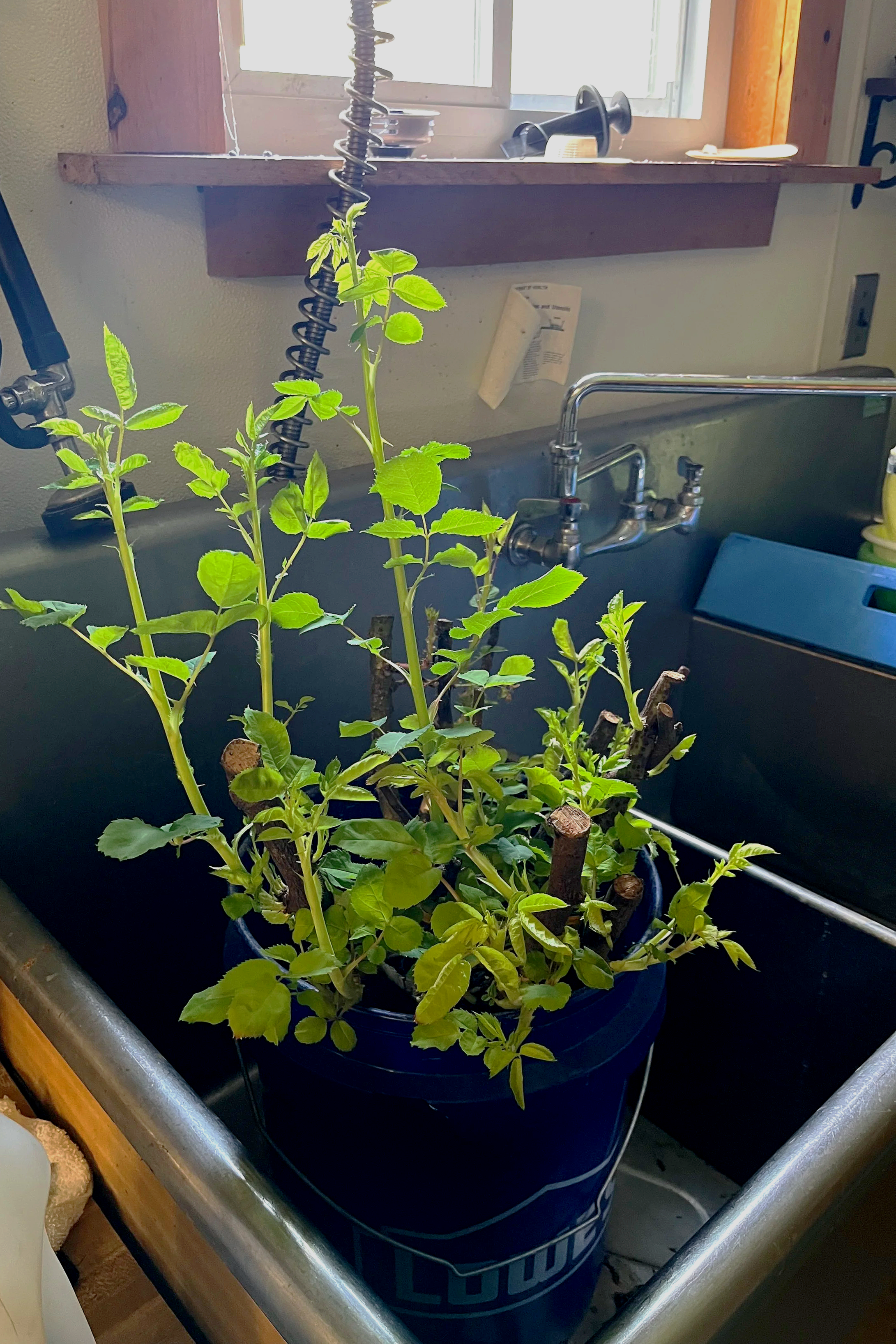
Roses that have been sitting in bucket of water for weeks near a sunny window, waiting patiently to be planted. We’ve seen roses bloom in the buckets before with no ill-effect to the longevity of the plant.
Photo by Karissa Monette
Harden off plant when you see lots of new leafy growth.
To avoid scorching the leaves, you will want to harden off the rose for a few days prior to planting in its permanent home. Expose the rose to a few hours of direct sunlight per day for a week or so prior to planting out.
Time to plant your rose!
Dig a nice deep hole, large enough for the roots to splay out and not be cramped.
Pour water in the hole prior to planting
Support roots during planting, make sure you do not break them. We like to make a mound in the hole, and place the rose over the mound to help support roots.
If the rose is grafted, make sure to bury the trunk, and have soil all the way up to the crown. Sometimes this means you need a really really big hole. Don’t skip out on this. Plant it up to the crown.
Pour some more water on top after the rose has been planted.
Make sure to keep plant well watered until it is well established.

One of the rose tunnels at Little Farmhouse Flowers.
Photo by Karissa Monette
This method will also work for regular bare root roses or potted plants that have been neglected. Follow the same protocol and you should be good to go!
Do you have any questions about rescuing roses? Have you tried this method yourself? Or do you have other methods that seem to work out well?
Let us know in the comments below!
-Karissa
