

Receiving & Planting Roses
Roses are a love language. And so are flowers, generally. And our world desperately needs more love. If you’re interested in adding roses to your collection and the history of rose production in the US, read on. Have a beautiful day. Protect your friends and neighbors. And get into some good trouble if you can.
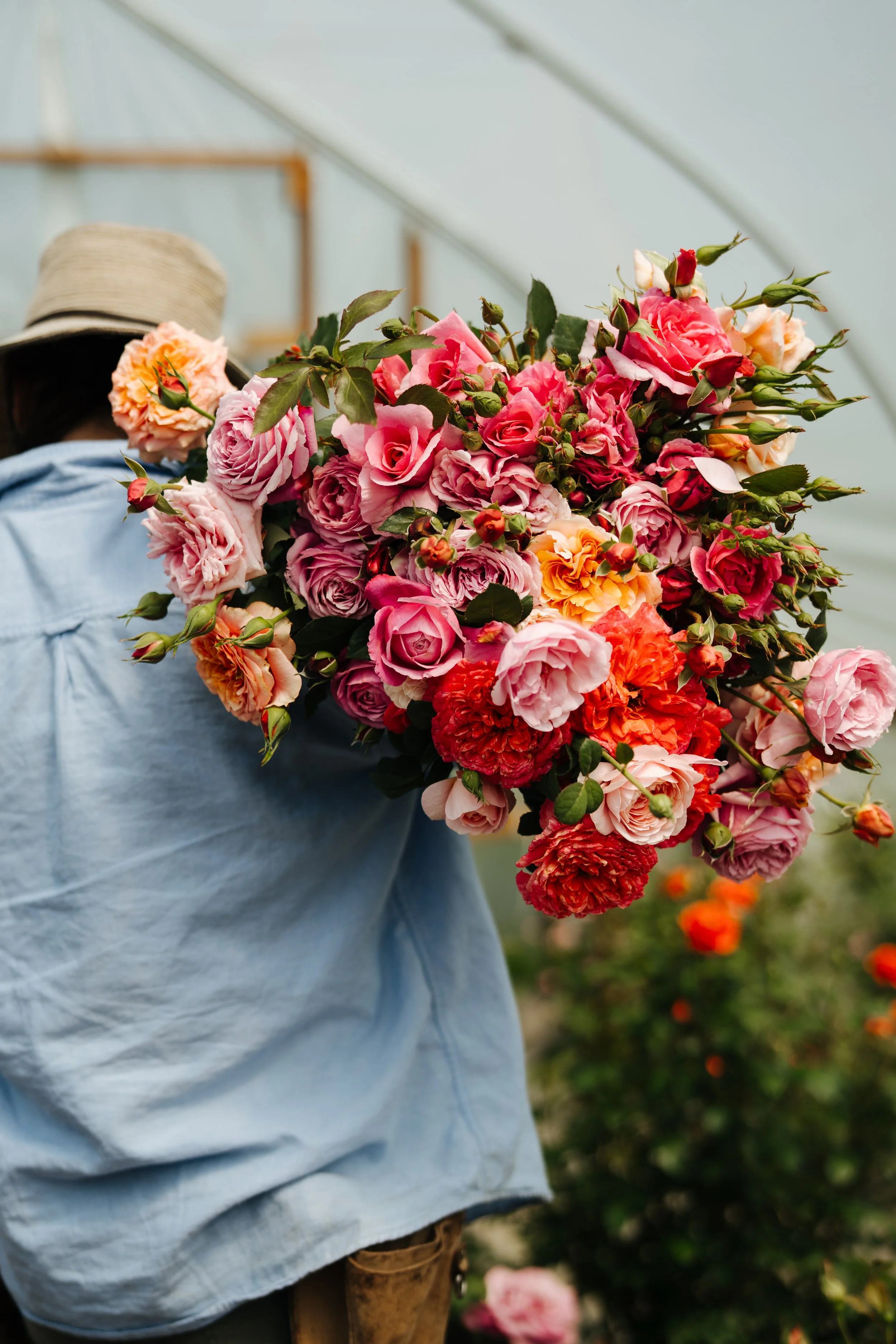
Little Farmhouse Flowers rosarian, Karissa Monette, with a rose harvest.
Did you know?: Ohio was the rose growing capital of the nation from the 1920s to the 1970s? Millions of rose plants were produced annually in Mentor, Ohio during that period. In Mentor, over a dozen local producers grew about 5 million rose plants each year. In Ohio. And, even before then, Springfield, Ohio was a major rose growing hub. More roses traveled from Springfield at the turn of the century than any other US city when growers learned how to ship dormant plants by rail.

Visitors in Springfield, Ohio
We offer Grade 1 (top grade) domestic bare root roses from three of the nation’s top growers. Our wide collection and low minimum allow new rose farmers to dabble in growing without making a huge investment. Our plants are shipped dormant and ready to take off. They begin to arrive at our warehouse in February and are available for shipping until the end of April. We recommend planting them up as early as you can. Grade 1 roses produce harvestable blooms in their first season when planted early. And they just keep getting better after that. Low minimum of 5 plants.
When you receive bare root roses, soak their roots in tall buckets (5 gallon hardware store buckets work well) for about 24 hours. Then plant them into either large nursery pots (we use 7-gallon size, so they can get a jump start on the season with a little shelter indoors) or into your growing site.
Here is our quick guide to receiving and planting roses:
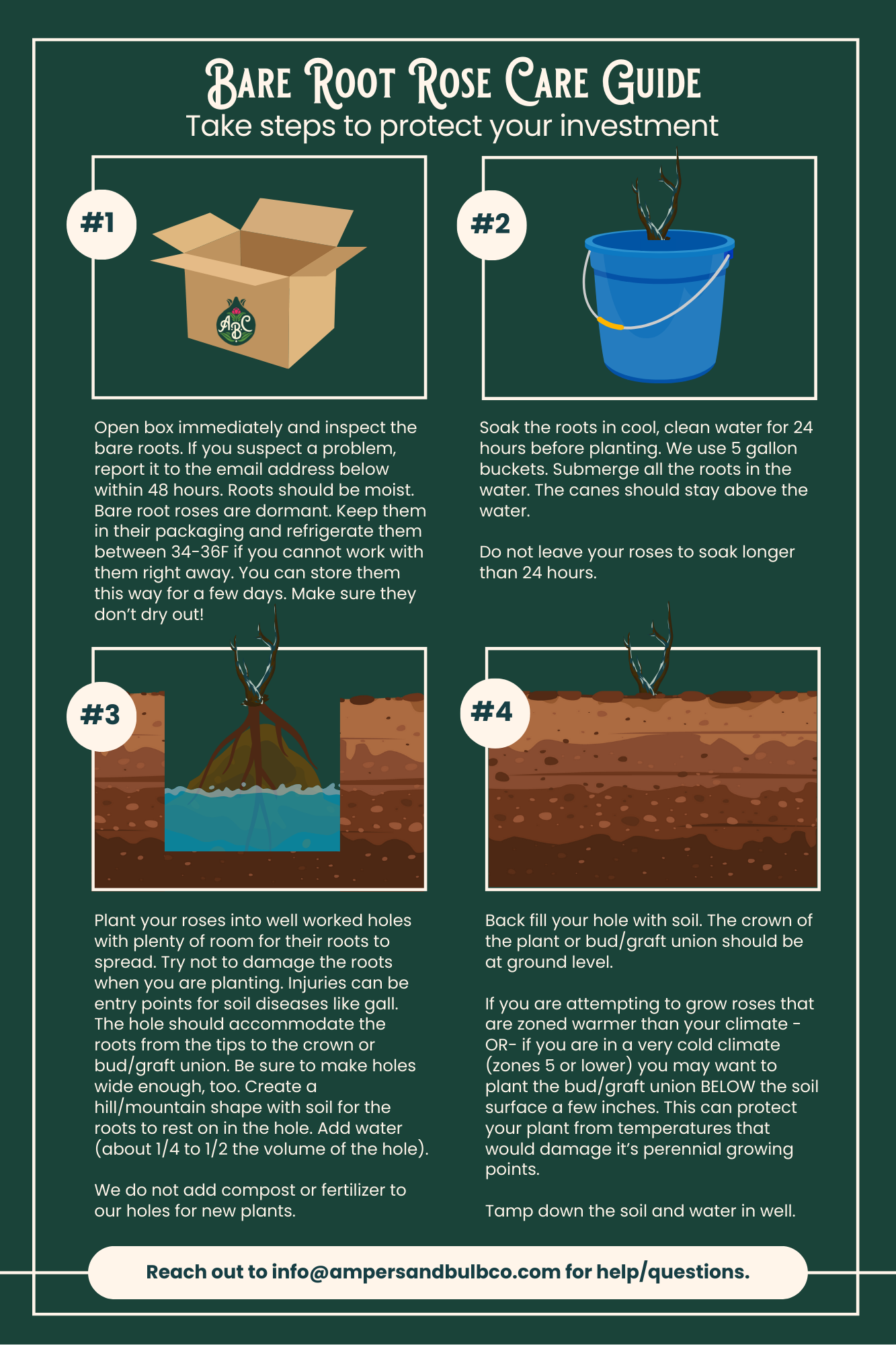
Provide regular watering as your roses settle in. Once established, a rose’s deep root system protects it from drought. Fertilizer feeds are provided periodically through the growing season in between flushes. A slow release fertilizer/well-finished compost can be added to the soil at the base of the plants at the beginning of the growing season.
We prefer to grow our roses under cover in our cold climate (zone 4/5). The cover helps the soil stay warmer in the winter and protects the plants from cold winter wind chill.
Every spring, we are spoiled with mountains of flowers. Our re-blooming varieties flower from about mid May to mid October.
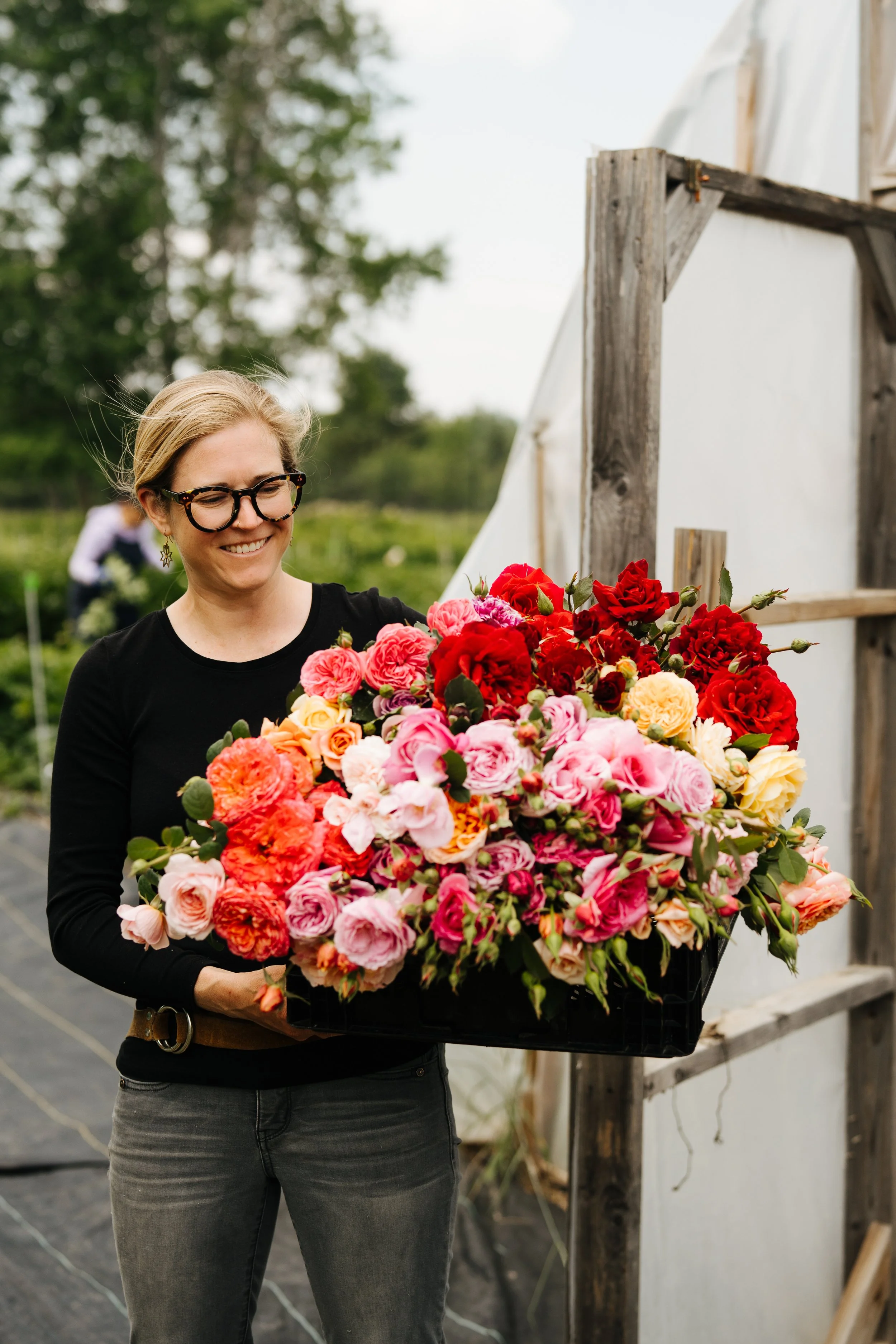
ABC owner, Linda D’Arco, with a late spring rose harvest at Little Farmhouse Flowers (our test farm).
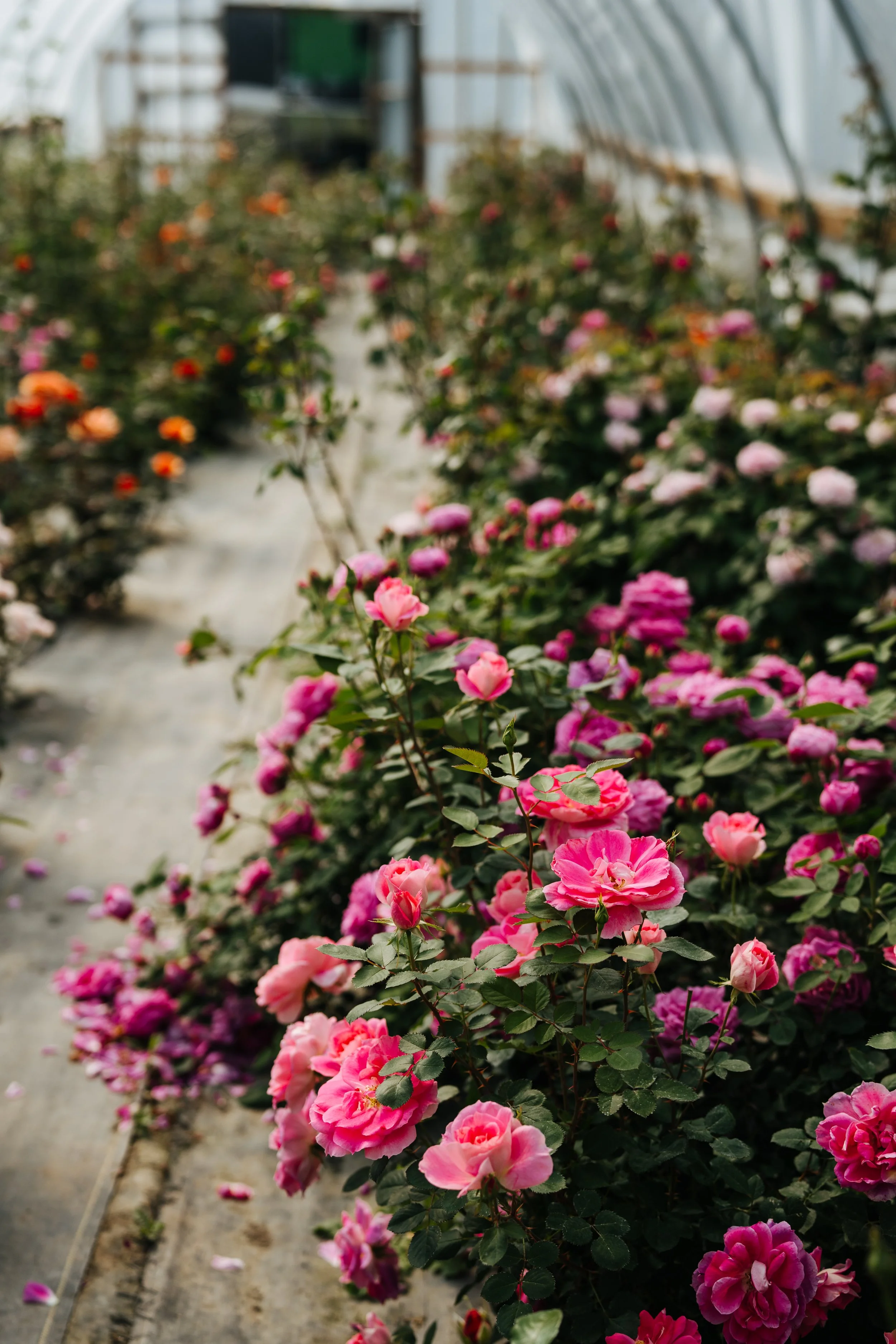
An unheated tunnel at Little Farmhouse Flowers.
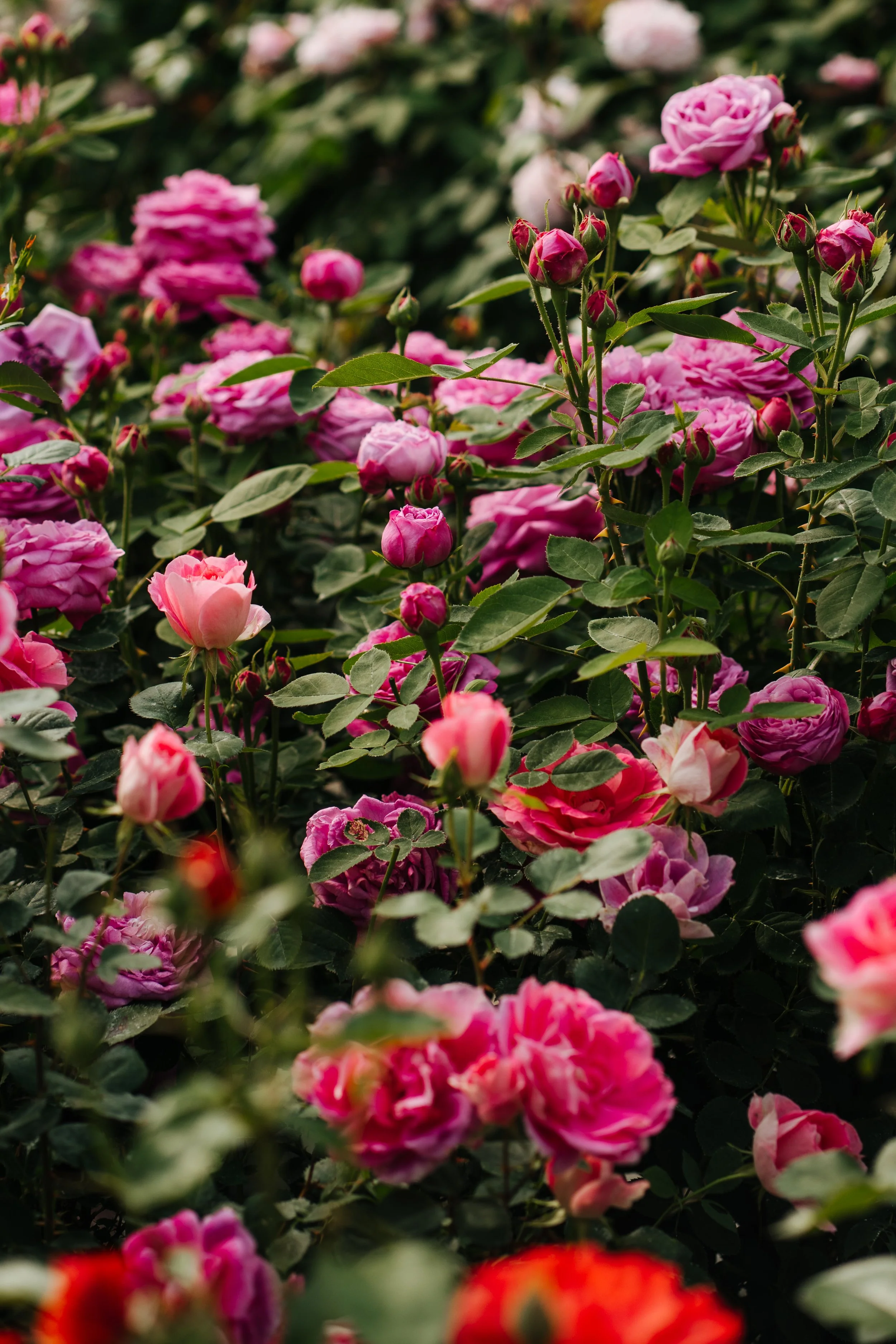
A flush of late spring rose blooms.