

7 Hydroponic Tulip Growing Myths
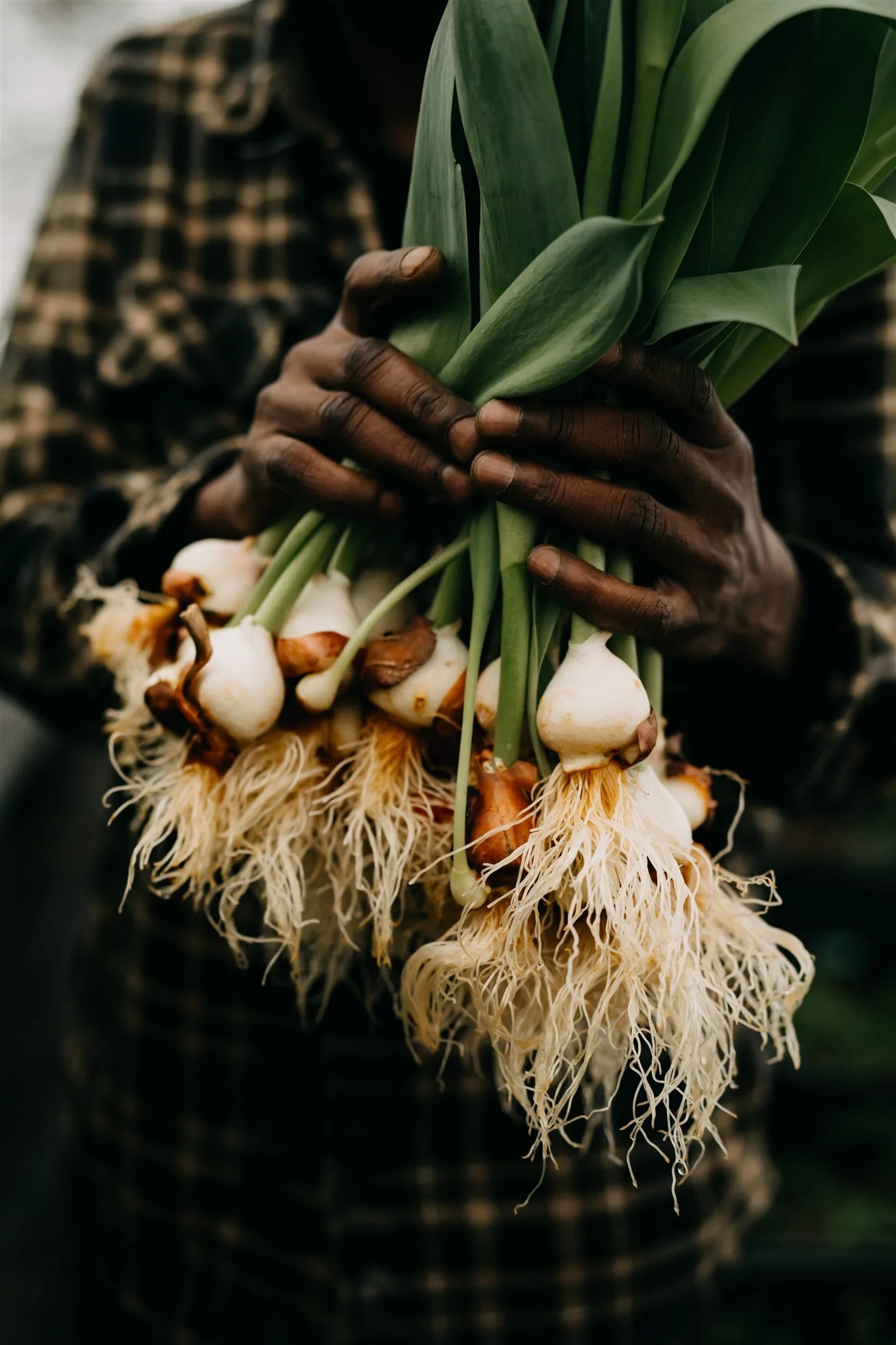
There are a number of myths floating around about hydroponic tulip growing methods. Here are some of the primary myths we see, why they aren’t best practice and what you should do instead to save time and prevent costly mistakes.
Remove the jackets from your bulbs prior to planting.
It’s a myth! There is no need to remove the jackets from your tulip bulbs prior to planting them hydroponically. If you go to see the farms in The Netherlands that are doing the pioneering work with hydroponic growing you will not see them removing the jackets of the bulbs prior to planting. Not only is that practice time consuming, but it also exposes the flesh of the bulb to the elements and greater risk of disease.
Plant as many bulbs as you can fit in the tray.
False! Please do not cram as many bulbs as you possibly can into hydroponic bulb trays. While you may feel accomplished initially, as the plants grow, they will be deprived of necessary airflow. When tulips do not have enough airflow, they can have respiration issues that lead to stem topple and unsaleable flowers. Controlling humidity levels in your growing space and providing good airflow are necessary components of successful hydroponic set ups. Signs of distress related to humidity and pending stem topple are: water beading on leaves and stems that looks like “sweat”, stems that abruptly fold in half, and cracking/rupturing of leaves as cells burst because they cannot breathe properly. Another problem with planting too closely is that it permits disease to move faster between plants. Leave a little “moat” around each bulb as a safety net.
Wash mold off growing bulbs with sanitizers like peroxide.
We don’t recommend spraying bulbs after they’ve been planted in hydroponic trays. (We never spray our bulbs before planting, either.) And we see A LOT of misinformation about this online. The most common reason people do this is to wash off surface mold. You know what else you see if you visit the big hydroponic tulip growing operations in The Netherlands? Mold. (see the video below) Fuzzy molds and pink-purple spotted fungi can develop on bulbs where they are exposed to the air in hydroponic trays and it is not a sign that you have a major problem. Take care to water directly into your hydroponic trays with a directed stream of water into the corner of the tray. Do not water from above if you have mold in your trays. That spreads the mold spores on to the surface of the water. We want to keep the water clean. Change the water if you see signs of what look to be grease or oil spots on the water surface.
Hydroponic bulbs need calcium fertilizer.
False. As with any kind of growing the things you add to a hydroponic set up are dependent on the environmental factors the plants are exposed to at your farm. There is no singular fertilizer that is right for every farm’s soil and in that same vein, their is no singular additive that is right for every hydroponic grower. Our farm has hard water. It already has a lot of calcium in it. We don’t need to add any, and our plants seem to benefit more from a bacterial root booster that we learned of from the cannabis industry. We add 2mL of Hydrogaurd to each tray of our tulips weekly. But other growers with calcium-deficient water may find that they like to or even need to add calcium to their water.
You need to use air bubblers.
We also do not use air bubblers in our trays and we don’t see our partners in The Netherlands doing that either. We change the water once between the rooting and growing stages, and then top off as needed. Each time the water is changed or added, it is oxygenated enough to satisfy our plants.
Hydroponic tulips are more prone to stem topple.
False. There are a couple of reasons that hydroponic tulips get a bad rap for being more prone to stem topple, but in reality these issues are related to grower error. For one (as mentioned in point number 2), it is easy and tempting to over-plant hydroponic trays, which leads to limited airflow and respiration issues. Secondly, hydroponic tulips are naturally more susceptible to problematic water, which can lead to growing phase problems like stem topple. Growers with town or city water that has fluoride in it should not grow hydroponically, or at the very least, wade carefully into hydroponic growing. Fluoride is toxic to many bulb crops, including tulips. It inhibits the uptake of calcium in tulips which is needed for cellular strength. And when there is no soil to buffer and filter that water, you can see problems.
Anyone can grow hydroponically.
While its true that anyone can grow hydroponically if they are careful and follow the proper protocols and needs for the plants, many people are limited in their ability to grow well hydroponically because of their access to appropriate water (as mentioned above), or climatic controls. Proper hydroponic growing systems include 3 separate climate controlled (humidity and temperature) spaces for dry storing bulbs, rooting hydroponic planted bulbs, and finally- growing the plants. That’s one more space than you need for soil forcing and that makes hydroponic growing less accessible to some growers - especially those with infrastructure limitations. In addition to avoiding fluoride, growers should be aware that tulips generally require a pH between 6 and 7. Many town and city water supplies are slightly alkaline, which makes their water less suited to hydroponic tulip production (again, there is no buffer for the roots of the plants from poor water when you’re growing hydroponically). However, when that slightly alkaline city water is filtered through slightly acidic soil or peat-based mediums, it is mediated and better aligned with the needs of the plant. This is another reason why some growers may experience more success with soil forcing than with hydroponic growing.
We hope this primer is helpful. There are so many more nuances to developing a successful tulip forcing operation (generally) and to hydroponic growing more specifically. Our friends over at The Tulip Workshop have developed a detailed online course and resource center for growers interested in entering this arena with support. We encourage you to take a look. The course provides instruction and direction in both hydroponic growing and soil forcing.
Here is a video of some of those moldy bulbs in a hydroponic tray at our own farm. As you can see, they are producing beautiful, healthy flowers. Our recommendation for growers who see mold on the bulbs in their trays is to change the water if the mold enters the water (it will look greasy or cloudy) and to add water to the tray in a careful, directed manner to avoid disturbing the mold spores. We use the “jet” setting on our hose sprayer and lower the water pressure with the valve on the hose so that the water enters the tray in a directed stream without much splashing.