

Are your bulbs ready to go?
Yes! But “ready to go” does not mean “ready to grow.”
We receive the “Are your bulbs ready?” question quite often from growers looking to purchase bulbs this time of year (January - February). It’s an important question. They want to know if our bulbs have been in cooling in order to prepare them for growing.
The answer is, yes! We keep all of our fall bulbs in cooling from receipt so that they are experiencing winter dormancy in preparation for forcing or growing in the spring.
So wether you’re ordering our “most chilled” bulbs - the 5C tulips OR bulbs that were listed as untreated in the fall— they are all now nicely cooled for you.
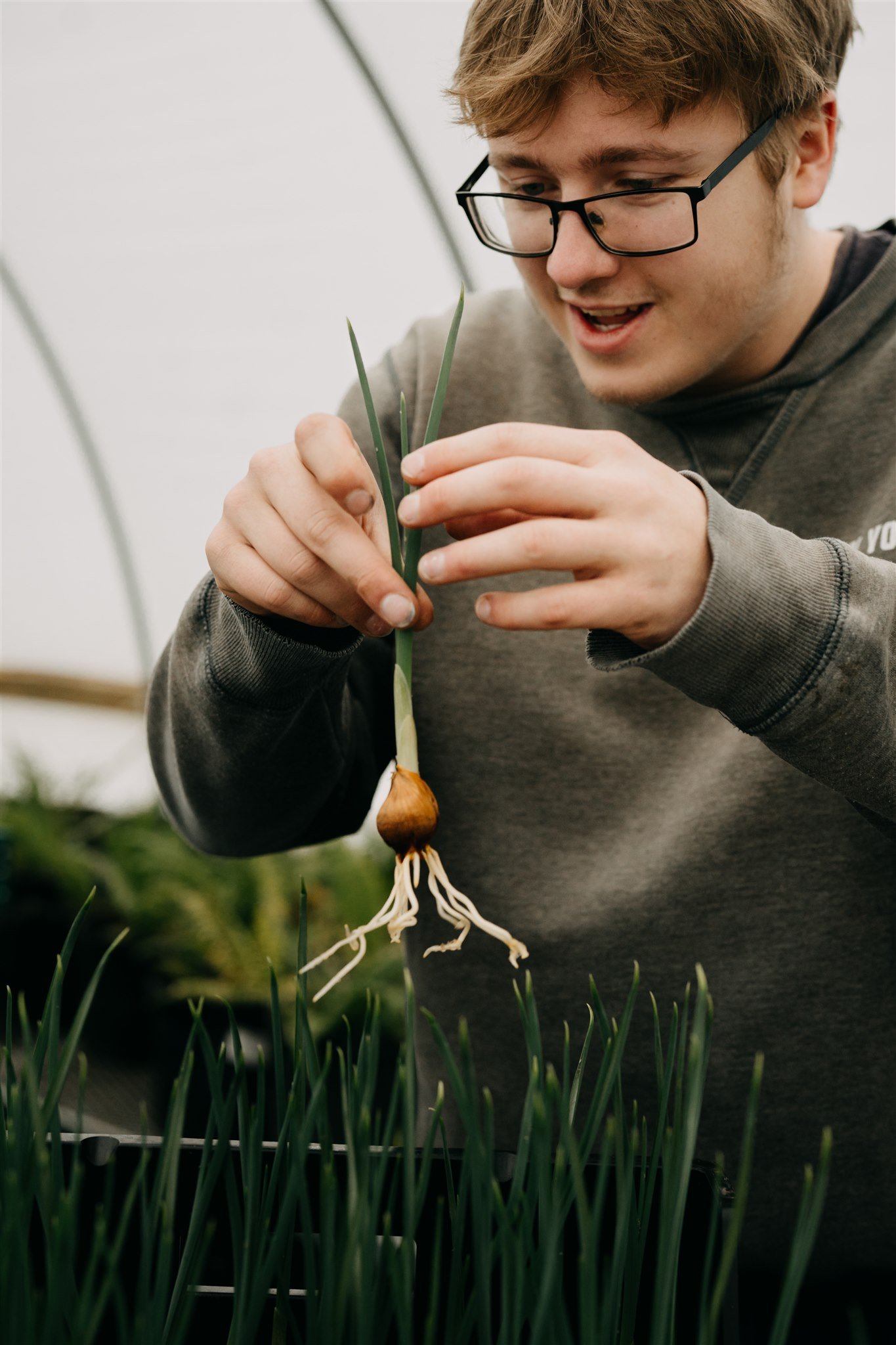
Dutch iris bulb with roots and young foliage.
But receiving all of their cooling in dry storage (unplanted) does NOT mean they are ready to grow. Buyers who purchase bulbs and plant them up and immediately bring them into a warm space for growing can experience problems. When we take something from winter cooling and put it directing into it’s optimal growing environment, we inadvertently skip the period of time when the bulbs develop their roots.
There are 3 distinct phases that require different environmental conditions:
Cooling
Rooting
Growing
Fall bulbs like tulips, hyacinth, wood hyacinth, daffodils, allium, dutch iris, fritillaria, muscari, crocus and more are great for forcing in the late winter and early spring. And buying pre-cooled bulbs now is a smart way to add these flowers to your program. (And bonus, they’re on sale!) But don’t forget the rooting period.
When your bulbs arrive, plant them up in their pots or crates and water them in well. Allow them to root for a period of 2-3 weeks in a cool location at about 50F. This temperature “reminds” the bulbs of fall soil temps or the warming of the soil in early spring and triggers them to develop healthy root systems prior to growing. Without a healthy root system, your plants won’t be able to access water or nutrients easily, and you can see issues like bud abortion or failure to flower.
Temperature matters.
If you try to root your bulbs at 40F, the bulbs will “think” they are still dormant and cooling at our warehouse. They may feel the soil and water and start to root, but it will be a slower process. If you root them over 60F, they will think it’s time to grow, even if they don’t have roots. So let’s talk about achieving 50F.
Bulbs can root in soil in pots or containers in temperature controlled coolers, sheds, garages, or even greenhouses, if monitored. One of our favorite devices for created a temperature controlled space in the colder winter months is an Inkbird. An Inkbird is a thermostatic outlet controller that allows you to set a temperature and connect a space heater for heat and/or air conditioner/fan for cooling. (We only use the heat outlet on our Inkbirds in the winter, because there is no need for us to have cooling come on when it is already so cold.) The heater switches on and off intermittently to maintain the temperature we need. We use Inkbirds in shipping containers, in sheds, in garages - where ever we need a little extra heat to set up an optimal rooting space.
It is really important that you don’t skip the rooting period and throw bulbs into a grow space at room temperature upon arrival. We hope this clarification is helpful. And we hope you know that it isn’t hard for most people to set up a good rooting space.
Let us know if you have any questions about the rooting period or any other growing concepts.
Cheers,
Linda
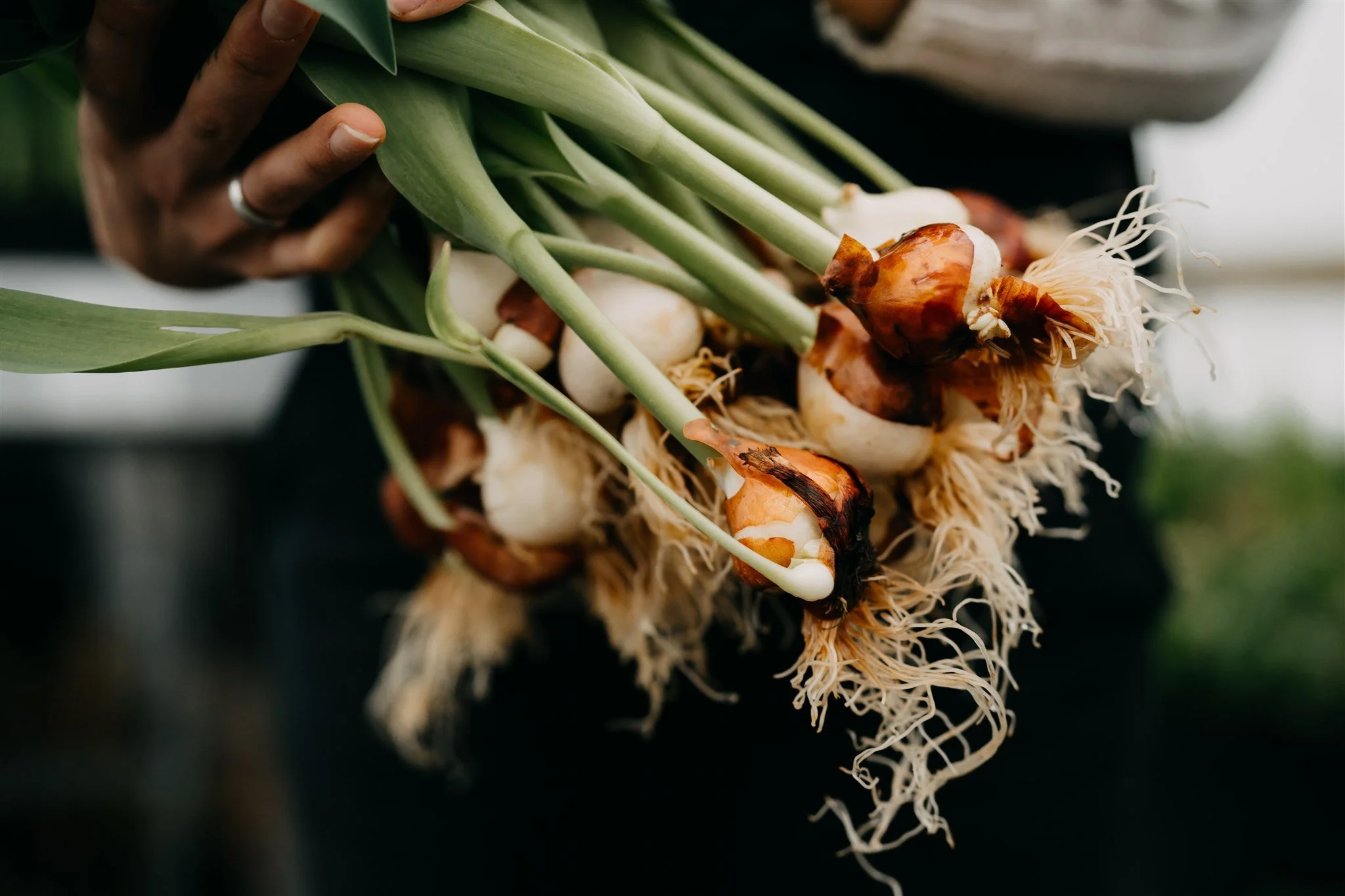
Tulip bulbs with roots at harvest time.